In my first self-designed class in German Studies, I taught women poetry to a group of advanced German students. I had endeavored to render the syllabus as representative of the diversity of German women poets as possible. Thus, the course featured poetry by black women poets, by poets from Austria and Switzerland, by disabled poets, Jewish and Muslim poets as well as trans-poets and even poetry by men critiquing gender in their poetry. Most students in the class were white, like me. When we got to discuss a poem by a black artist which critiques how structural racism is inadvertently performed through daily language, the only student who understood the poem’s gist was the one black student in the class. When he presented his interpretation after a long, laborious class discussion in which I had tried to guide the group to understand the way in which the poem addresses racism, I felt a strong feeling of insecurity arising in myself: I was not sure how to react to his insight. It suddenly occurred to me that I should have provided space for addressing how the racism marked in the poem also structured our realities, and, indeed, the very discussion we were having, considering the fact that our classroom mirrored the structural discrimination of black students at Ivy League institutions.
Never had a lack of preparation felt as bad as this time. I immediately went to my supervisor to discuss the situation with her. Her reading recommendation (Claude Steele’s Whistling Vivaldi: How Stereotypes Affect Us And What We Can Do) helped me turn the shame I felt in the incident into a strong commitment to turning my classrooms into spaces where diversity, equity and inclusion (DEI) is a conscious, constant concern rather than a marginalized fact of human plurality. Ever since, I have been reorienting my research and teaching to foster diversity by implementing it as “a critical and transformative factor” (Columbia University’s definition) in my communication with students and student activation techniques, in my formative and summative assessment strategies, in my corpus selection, data interpretation, syllabus design, and activism in initiatives.
Attending to DEI in German language and literature teaching is crucial because of the racism and sexism inherent in the discipline’s canon. Asked about their associations with ‘German’ culture at the beginning of my courses on German literature or language, most of my students respond by dropping such names as Mozart, Kant, Nietzsche, or, sadly, Hitler. Reflecting on these associations together, we quickly realize that while these men are known for very different things, they unfortunately share the characteristic of being white men. My teaching and research seeks to counter the structural discrimination implicit in the homogeneity of such stereotyping. Attending to DEI means to me to facilitate the appearance of the heterogeneity of our societies – for instance Germany’s, which, like many other Western (European) countries, always had significant, yet perpetually marginalized black and queer life.
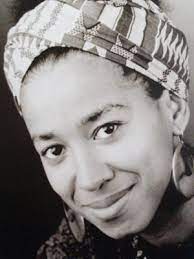
From the first day of class, my German language and literature courses champion the life and work of figures marginalized in the German canon, like Black Germans, Muslims, Jews, or women. The goal of my class on poetry, for instance, was not only celebrating writing that is perpetually underrepresented on syllabi but also questioning the work of the gendered category itself. Inspired by Sarah Ahmed’s critical feminist work on citational practice (Living a Feminist Life, 2016), I designed the syllabus and selected readings based on the reasoning that as long as structural discrimination against women is still prevalent, using the category as a heuristics is critical work – but only as long as its aim is moving beyond the category itself by realizing the inherent diversity in the group of people subsumed under ‘women’. The class conception was guided by an intersectional feminism that considers ‘woman’ as one structurally discriminated identity category apart from many other, with which it overlaps. The first idea for the class emerged from an initiative on critical feminist citational practice called Teaching Citational Practice. In this context, I published a teaching resource aimed at soliciting students’ critique of the diversity profile of any given syllabus. The goal of this handout (distributed together with the syllabus) was to empower students to critically reflect on their course content and draw on the diversity of the student body itself to develop more inclusive curricula.
Such empowerment has been guiding my teaching more generally. Apart from asking students their associations with German in first sessions, students get to facilitate their own complete class sessions in groups at the end of the semester in my classes for which they choose material on their own. In my advising during the preparation phase of the respective projects in the poetry class, I excitedly noticed that all students selected contemporary creative work by German artists with migration histories. (Results can be found here and here). This increased interest in a diverse rather than homogeneous conception of the country, culture and language confirmed me to continue foregrounding the work of marginalized figures. In future classes, I will adapt syllabi accordingly, to include contemporary rap by Kurdish German women, for instance. To diversify media of assessment, presentations are complemented by weekly writing assignments of analytic, interpretive and creative nature as well as self-reflection activities.
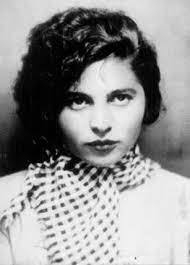
Countering the dominance of white Christian men in the German canon, my research champions the work of structurally neglected intellectual achievements of women in German Literary Studies. For instance, my dissertation brings into conversation two of the most prominent women intellectuals of the twentieth century: Hannah Arendt and Susan Sontag. Attending to affinities in their work as well as biographical intersections, I comprehensively study a transatlantic relationship that has to date been marginalized by scholarship and the public. My main claim is that Arendt and Sontag unearthed the political potential of literature by intervening in patriarchal debates about literary criticism in postwar US and Europe through innovative forms of critical essayistic writing. Challenging their perpetuate marginalization as Jewish women writers, my work seeks to boost their “discursive authority” (Susan Lanser. Fictions of Authority, 1992, 6) at the intersection of German, Comparative, and Jewish Studies.
Diversifying German literature and language through transatlantic ties has become a main concern for me beyond research and teaching. Throughout my teaching at Columbia, I have been mentoring international students as well as students interested in studying abroad in Germany, through letters of recommendation for scholarships in Germany or by offering time-intensive conversations concerningchallenges as a result of international students’ identities. My mentoring is informed by my own experience as an international student at a US American university campus. As a foreigner in the US, I felt for the first time what it means to be ‘othered’ – to be approached as someone who is not considered a self-sufficient, self-explanatory part of the group but whose presence requires explanation. This experience motivates me to continue championing international exchange. Outside Columbia, I have done so through my work for the annual German American Conference for which I organized cultural events like online exhibitions, readings and panel discussions. Similarly, diversifying the German landscape across ages and class strata has become my pursuit in tutoring adult groups in German off-campus. Offside and after College, few people get the chance to learn or practice the language. More specifically, teaching heritage speakers of Jewish decent has been ethically and historically important for me as it has given me the chance to encounter, as a German native speaker with non-Jewish ancestors, people whose parents migrated to the US because of German National Socialism and even lost family members in the Holocaust. As Germany lacks Jewish life because of the latter, any Jewish person who today engages with German(y) diversifies the language and culture – which to contribute to I consider extremely urgent considering that the extreme right has been increasingly gaining more power again over the past decade in Germany – as in the US and globally. Especially in educational contexts, accounting for the demands of structurally discriminated minorities is essential as the extreme right misuses the idea of ‘free speech’ against demands of politically correct communication. (Cf. a recent controversy (German and American) about a novel that features the “N-word” prominently.)
My personal experience as a white, female German academic in the US has sensitized me for my own harmful privileges and the manifold ways in which our disciplinary curricula contribute to structural discrimination based on race, class, gender, age, physical ability or nationality. When I reenter German academia upon graduation, my goal is to maintain the transnational perspective on Germany I learned to inhabit in the US. Learning from leading political figures like the poet Max Czollek, or minister for Inclusion and Anti-Racism Alabali-Radovan, I intend to turn my classes and writing in opportunities for the appearance of diversity as the plurality of irreplaceable singulars by addressing it consciously and explicitly. In preparation, I joined a diversity initiative of a women leadership scholarship that I am an alumna of. Further, I intend to join the DDGC Collective (Diversity, Decolonization and the German Curriculum) to take my personal and local efforts to an institutional level. With Hannah Arendt, I consider diversity an essential quality of humanity and a condition of human dignity which I seek to account for and amplify in my classrooms.